Cloud & AI Architecture Patterns
Explore our curated collection of proven architectural patterns. These blueprints are designed to solve complex business challenges and accelerate your journey to a modern, intelligent, and scalable technology set that delivers measurable business value at scale.
Retrieval-Augmented Generation (RAG)
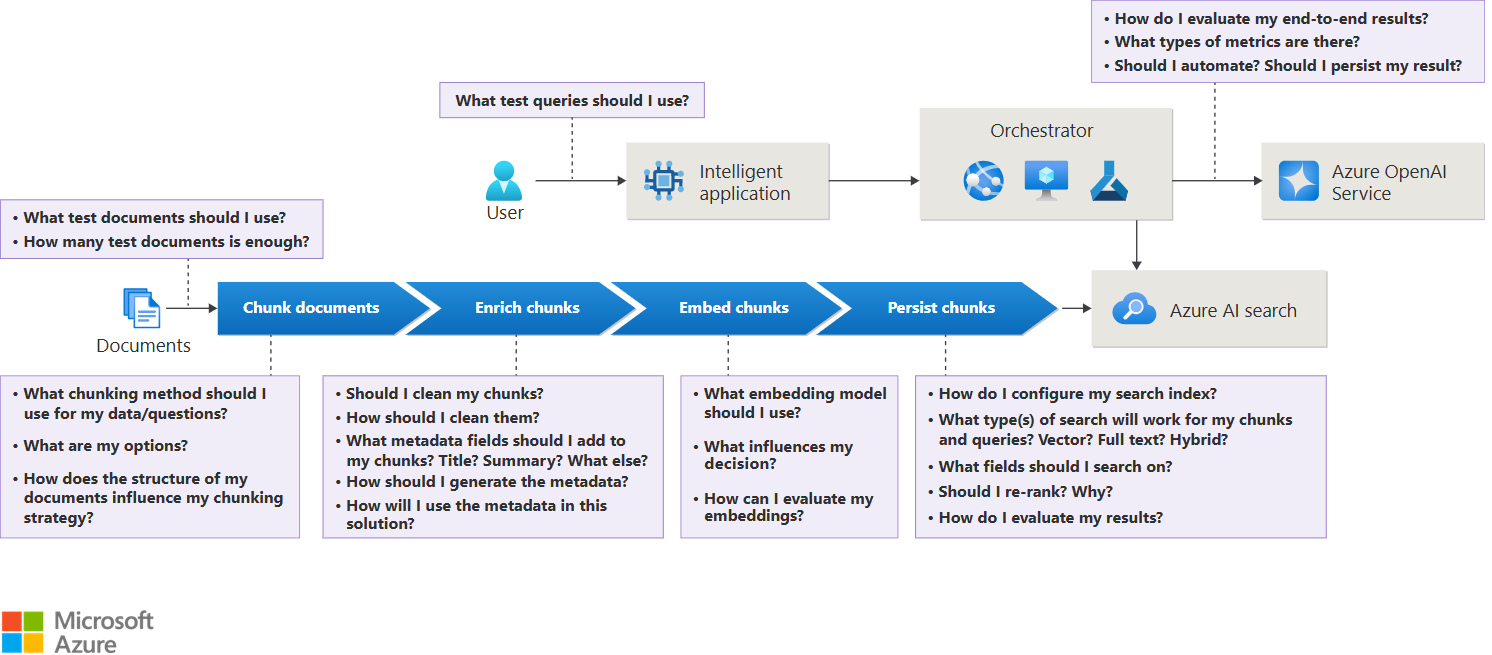
Retrieval-Augmented Generation is a foundational architectural pattern that makes Large Language Models (LLMs) contextually aware of an organisation's private, proprietary, or real-time data. The process involves two key stages: first, retrieving relevant data snippets from a corporate knowledge base (like a vector database), and second, augmenting the user's prompt with this data before sending it to the LLM. This grounds the model's response in factual, timely information.
Smart Chatbot
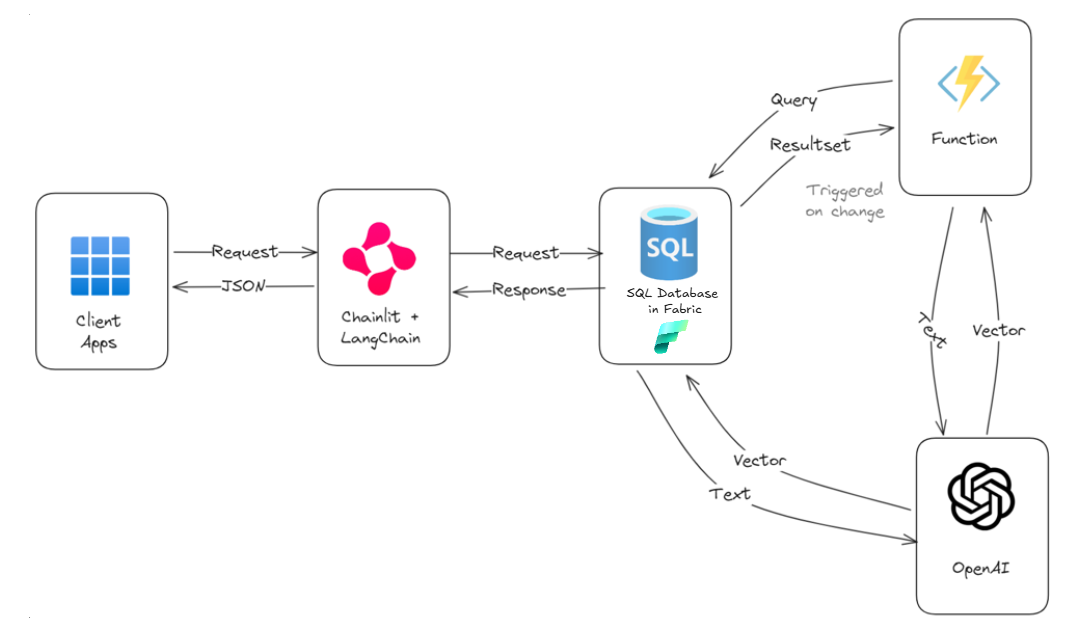
A Smart Chatbot is a user-facing application that provides a conversational interface, enabling users to interact with organisational data and services through natural language. It acts as the 'front door' to complex data systems, leveraging a powerful backend like a Retrieval-Augmented Generation pattern to deliver intelligent, context-aware responses. Frameworks like LangChain are used to orchestrate the flow of information from the user, to the knowledge base, to the LLM, and back.
From RAG to Chat (via GraphQL & MCP)
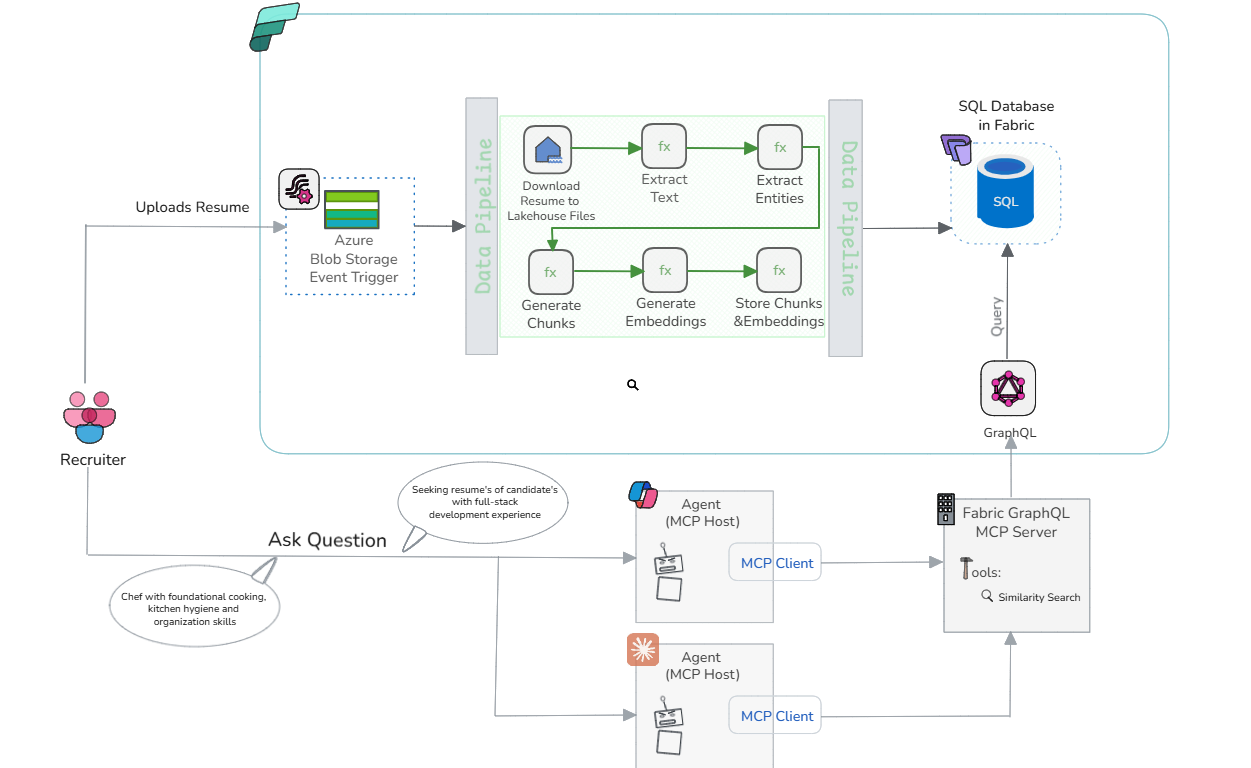
This advanced pattern evolves a chatbot from retrieving text chunks to having a dynamic, structured conversation with data in a Fabric SQL Database. It uses a GraphQL API to expose the database schema and the Model Context Protocol to allow an AI agent to intelligently discover and use the API. This enables the agent to construct its own precise queries against the database in real-time.
Model Context Protocol (MCP)
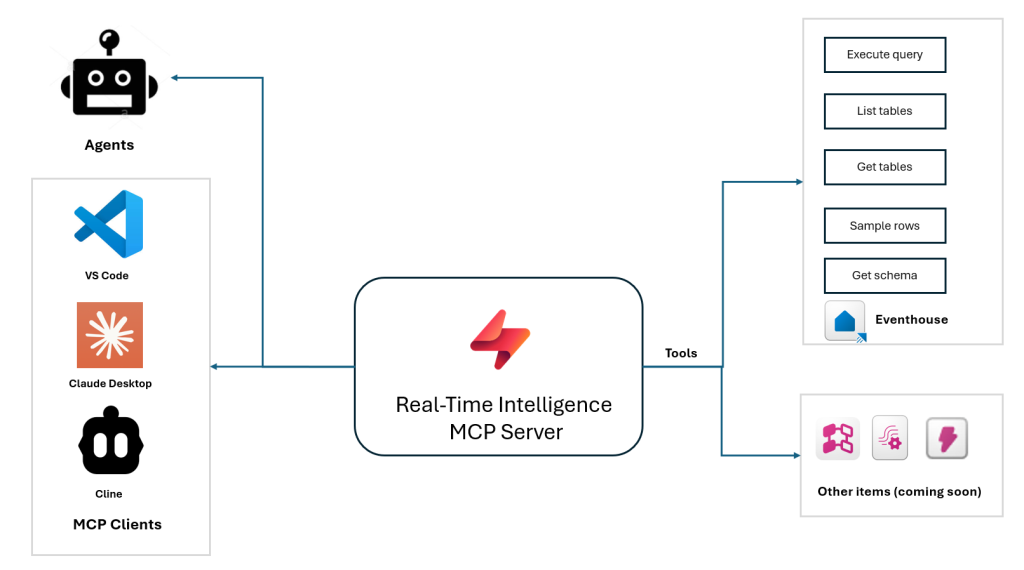
The Model Context Protocol is an open-source standard that acts as a universal adapter between AI models and external tools like APIs and data sources. It provides a 'plug-and-play' infrastructure that allows AI agents to find, connect to, and reason over enterprise data without custom integrations for each tool.
Fabric Data Agents
Fabric Data Agents are a native feature for building custom, conversational Q&A systems. An agent acts as an AI-powered assistant that can engage in natural language conversations about data stored across an organisation's OneLake. It uses the Azure OpenAI Assistant API as its core reasoning engine to interpret questions, identify relevant data sources, and generate queries.
Copilot for Data Professionals
A suite of AI-powered assistive tools embedded directly into Microsoft Fabric workloads. It acts as a collaborative partner for data engineers and scientists, generating code, building pipelines, and translating natural language into complex Kusto Query Language queries. It augments the developer's workflow rather than replacing it, speeding up repetitive tasks.
Azure AI Document Intelligence
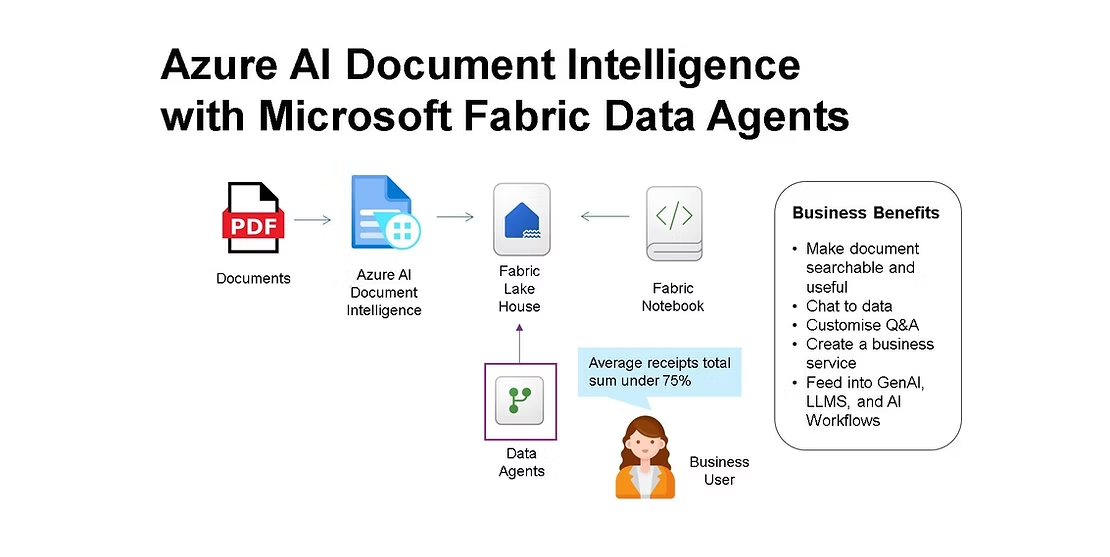
An Azure AI Service that applies machine learning and Optical Character Recognition to automatically extract structured information (text, key-value pairs, tables) from unstructured documents like PDFs and images. It offers pre-built models for common forms (invoices, receipts) and the ability to train custom models for bespoke document layouts.
Fabric AI Translation
Incorporates Azure AI Translation services directly within a Microsoft Fabric data lakehouse solution to handle multilingual data. This is typically orchestrated via a Fabric Notebook or Data Factory pipeline that calls the translation API and writes the results back to a new table or column in the Lakehouse.
Real-Time Intelligence (RTI)
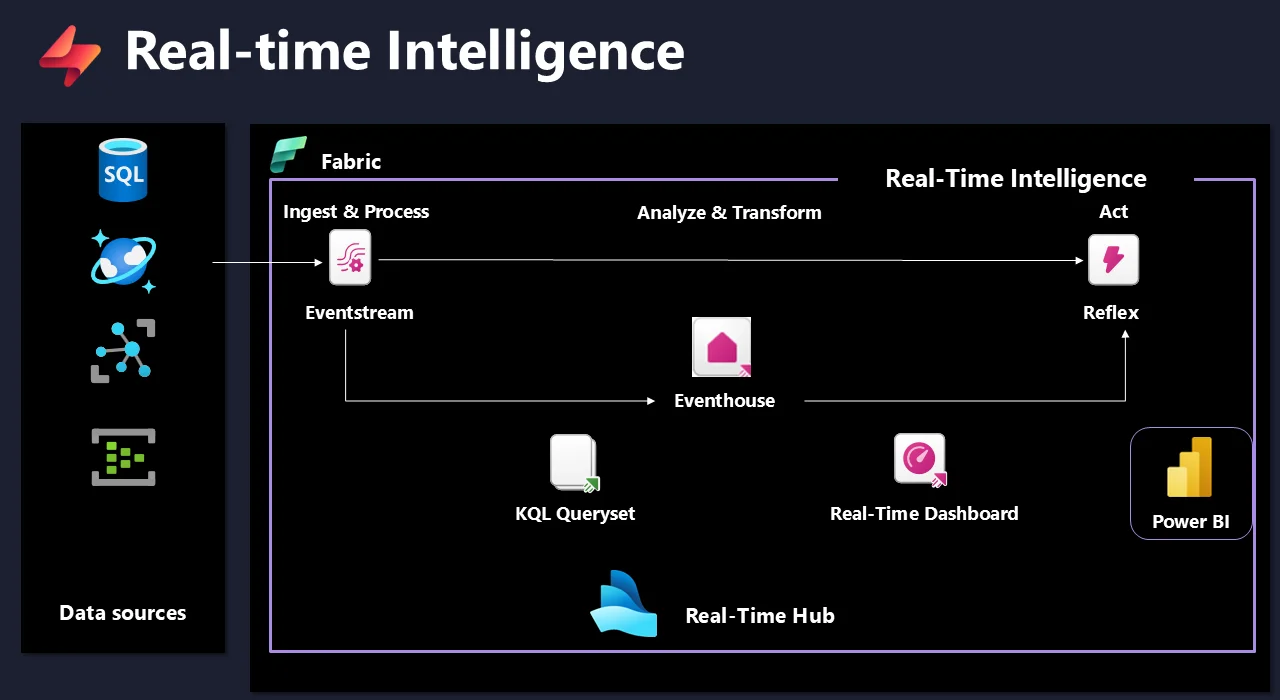
A complete, end-to-end workload within Microsoft Fabric designed for handling event-driven scenarios and analysing data in motion. It provides a unified suite of tools (Eventstreams, KQL Databases, Activator) to ingest, process, analyse, and act on streaming data from sources like IoT devices, application logs, and change data capture feeds.
Computer Vision
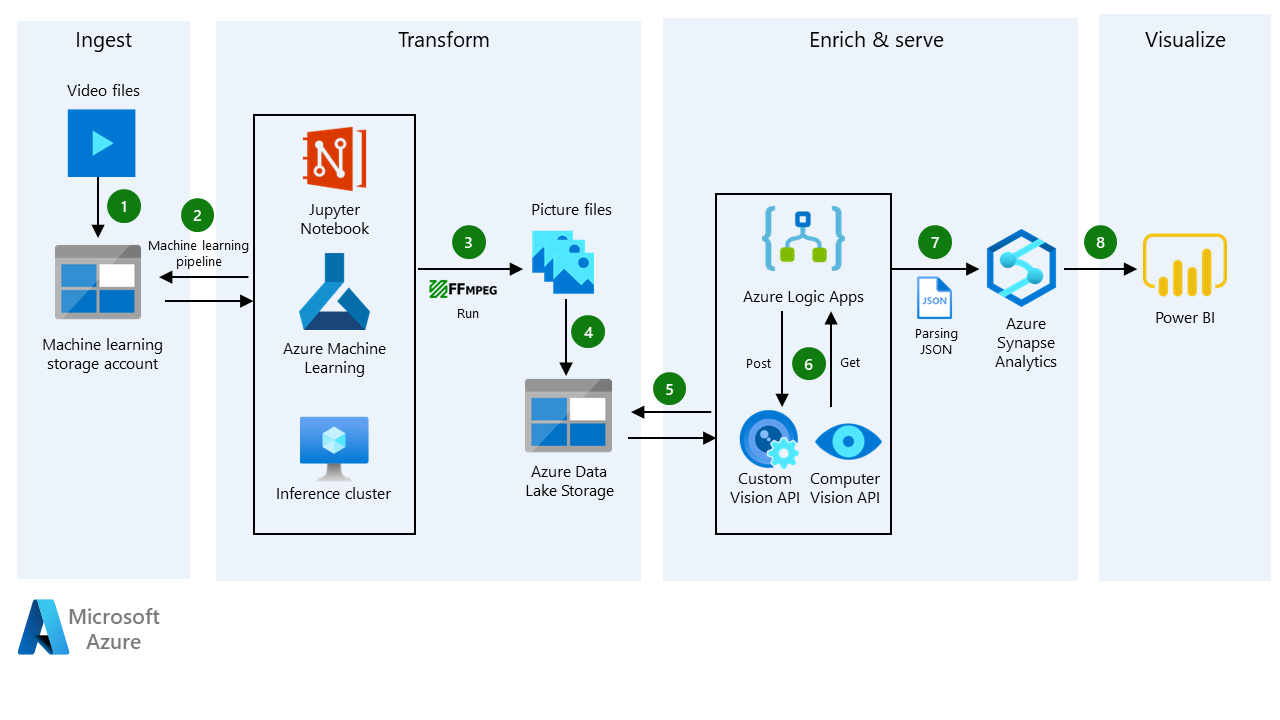
This pattern involves integrating powerful Azure AI Vision services into data analytics workflows. These services provide pre-trained models that can perform tasks like image analysis (generating tags and captions), object detection, and Optical Character Recognition with no machine learning expertise required. The results are typically stored as structured metadata alongside the original image.
Batch Machine Learning with Azure ML
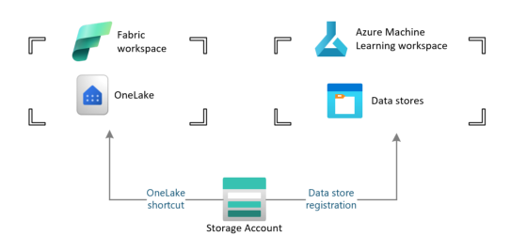
A robust method for running large-scale batch scoring jobs using models from Azure Machine Learning on data in OneLake. It uses OneLake's 'Shortcut' feature to create a zero-copy integration with an Azure Data Lake Storage Gen2 account. This allows Fabric and Azure Machine Learning to operate on the same physical data without costly and slow data movement.
Copilot for End Users & Business Analysts
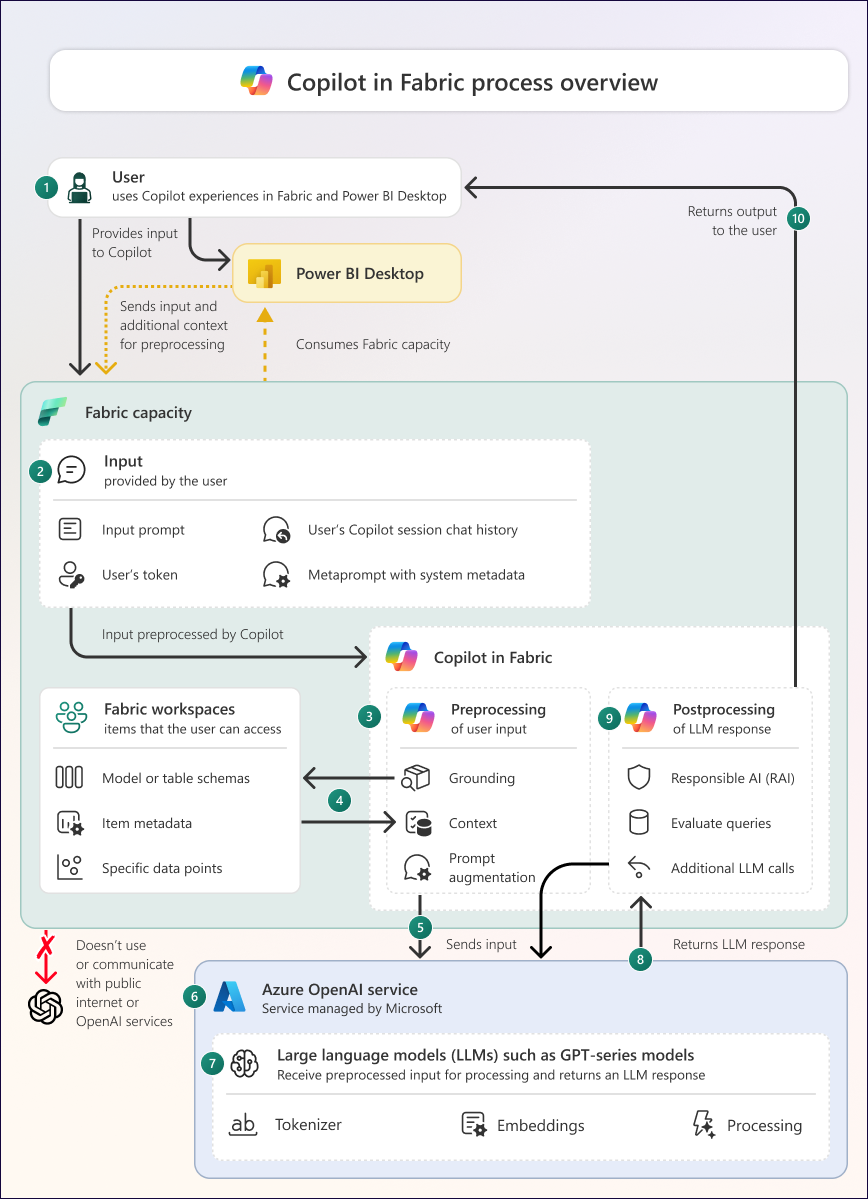
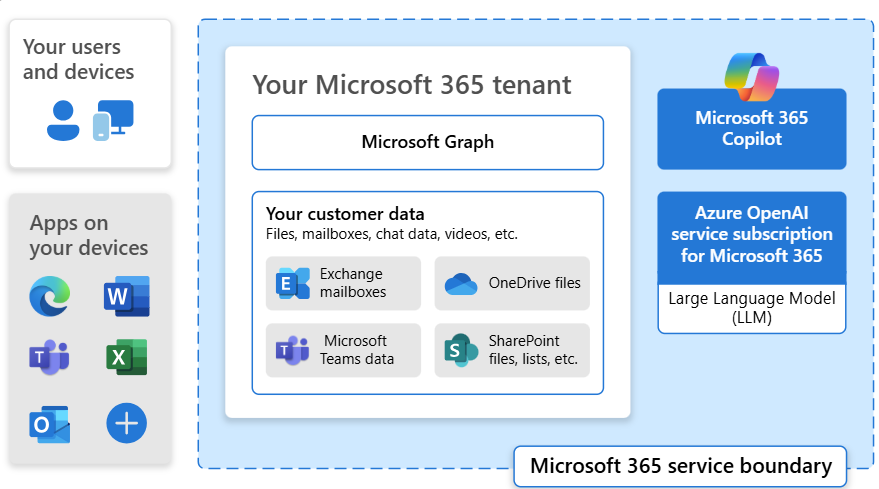
The Copilot experience designed for consumers of data within Power BI and Microsoft 365 apps. It empowers non-technical users to explore data, generate insights, and create visualisations using simple, conversational language. It acts as a personal data analyst for every user, leveraging existing Power BI semantic models and Fabric Data Agents.
Referenceable Architecture for Operations (RAO)
Implements a standardised framework and a set of best practices to streamline and optimise IT operational processes across the data estate. This is less a single technology and more a holistic approach to governance, monitoring, automation, and security to ensure a data platform is robust, reliable, and efficient.
Let's discuss how these architectural patterns can be tailored to solve your specific challenges and drive business value. Our team is ready to help you implement proven solutions.
Contact Us